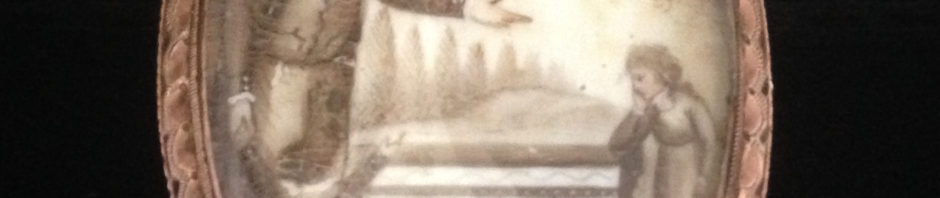
Personal elements of mourning are individual and unique. There’s no prescribed way of behaving when one is in grief, but the way it manifests in fashion and art are the unique ways that a person can display their grief. In the post c.1760 period, the Neoclassical movement allowed for a unique outlook on how death… Continue reading Alas! She’s Gone, Part 1
Tag: Tomb
A French Mourning Pendant in 1787 For A Child
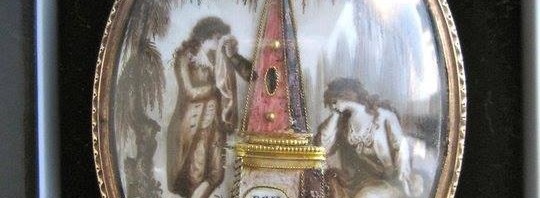
One of the most difficult concepts to gasp when identifying and appreciating mourning jewels is trying to separate the emotional context from the facts of the piece. In most cases, a simple evaluation can extrapolate what the jewel is, when it was created and who it was created for. These jewels are monuments, fashionable tombstones… Continue reading A French Mourning Pendant in 1787 For A Child
French Hair Art & The Industry of Mourning
“Hair is at once the most delicate and lasting of our materials and survives us like love. It is so light, so gentle, so escaping from the idea of death, that, with a lock of hair belonging to a child or friend, we may almost look to to Heaven and compare notes with angelic nature,… Continue reading French Hair Art & The Industry of Mourning
To bliss / There’s rest in Heaven Sepia Neoclassical Pendant
‘To Bliss’ is one of the more commonly seen statements in Neoclassical jewels, be they sepia or colour. It is often the introductory statement base with another phrase used in conjunction to form the full dedication and it offers us many questions. It is a statement on the culture of the time. While religion was… Continue reading To bliss / There’s rest in Heaven Sepia Neoclassical Pendant