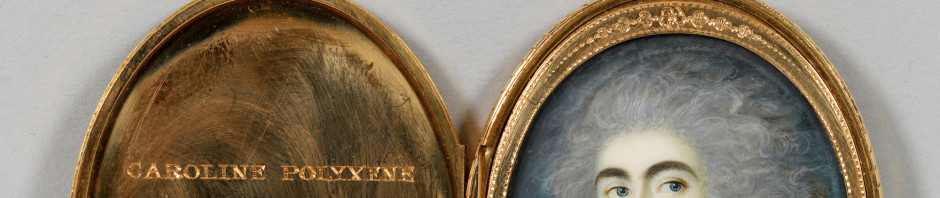
Having privilege in wealth is not required for mourning jewels, but it certainly helps. The range of quality in bespoke jewels is only limited by resource accessibility and wealth. For royalty, the quality tends to be of the highest level and these are the best jewels to identify for their specific time and age. This… Continue reading Neoclassical Mourning Locket & Royalty, 1821
Tag: Colour
Charles I Royalist Pendant, Jan 30, 1648
Charles I was born on the 19th of November, 1600 and executed on the 30th of January 1649, facing a tumultuous rule which temporarily ended the monarchy in England. His death would spark a Royalist movement that would lead to the rise of the mourning industry in jewellery; creating the affectation of wearing a jewel… Continue reading Charles I Royalist Pendant, Jan 30, 1648
‘A Parents Loss’ Mourning Miniature
It is often when appreciating a mourning jewel that the nature of the subject gets lost. The beauty of a jewel, the artistry and the quality all define the appreciation, but the most grounding element is always in the dedication. With the dedication in this miniature, we see the personal statement of combined loss –… Continue reading ‘A Parents Loss’ Mourning Miniature
Enamel…
If black enamel means death, white enamel means purity and virginity and blue enamel means that the loved one was considered ‘royalty’, have you got other coloured enamels on jewellery and if so, what and what do you consider them to be? If anyone answers to this, feel free to post pics (there are a… Continue reading Enamel…