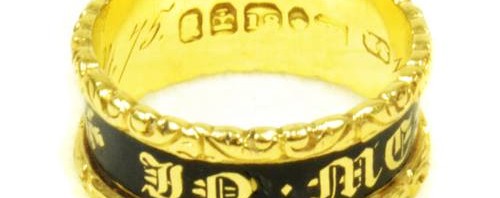
Black enamel bands are the most recognised of mourning jewels, being placed in very visible positions for others to see, easy and cheap to manufacture and all for the purpose of creating the wearer to be a walking tombstone for the person who is deceased. Their ability to be re-appropriated or kept by a family… Continue reading A Mourning Tour: In Memoriam / In Memory Of Rings, 19th Century
Tag: Band
Connecting And Collecting In An 1820 Ring
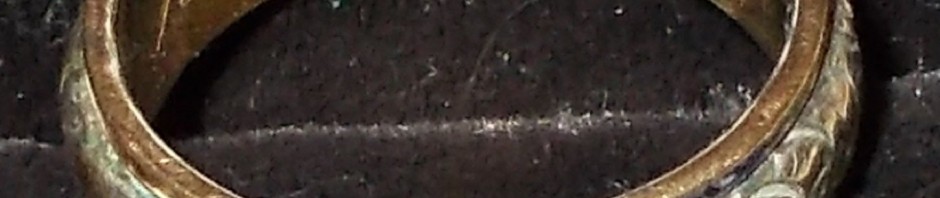
Collecting is an art in itself. Discovering facts about a jewel helps one find out more about the life of the person who wore it and how their emotion created something which they felt was a way of representing themselves within society through a jewel. Recently, the Inspired by Antiquity blog reached out to me… Continue reading Connecting And Collecting In An 1820 Ring
1803 Green Enamel Mourning Ring: Part 2
In the first part of this article, the elements that created a green enamel mourning ring have been discovered. The use of enamel was the main identifier of love and sentimentality due to its simplicity in colour, but this could not have been the case if the Neoclassical period remained popular. A series of events,… Continue reading 1803 Green Enamel Mourning Ring: Part 2
1803 Green Enamel Mourning Ring: Part 1
Enamel is the primary identifier for mourning and sentimental jewels, with colour being the most iconic and simplistic way to denote emotional symbolism. Its colours denote the sentiments of love, passion, respect and death. The Romantic period and its influence of change to the Neoclassical period of the late 18th century to the mid 19th… Continue reading 1803 Green Enamel Mourning Ring: Part 1