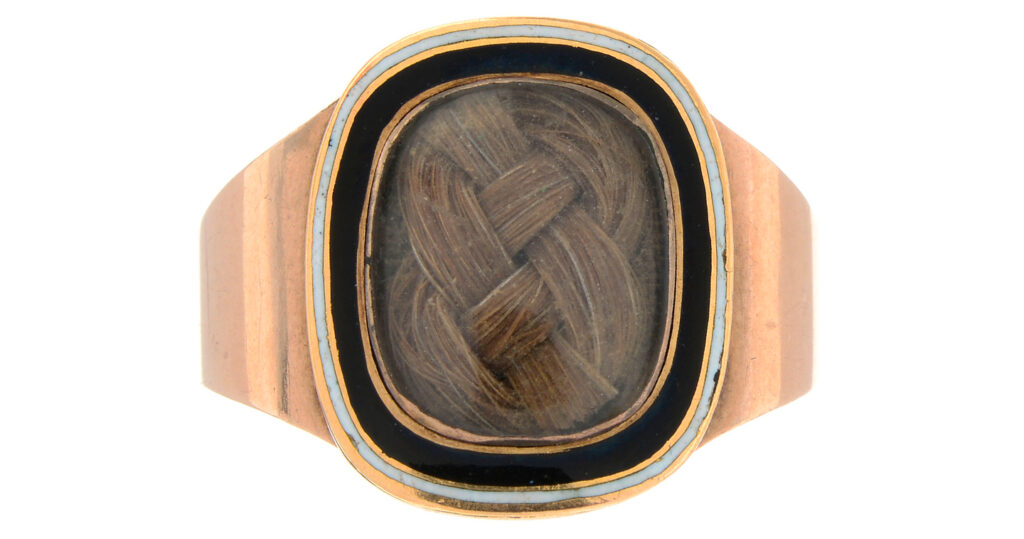
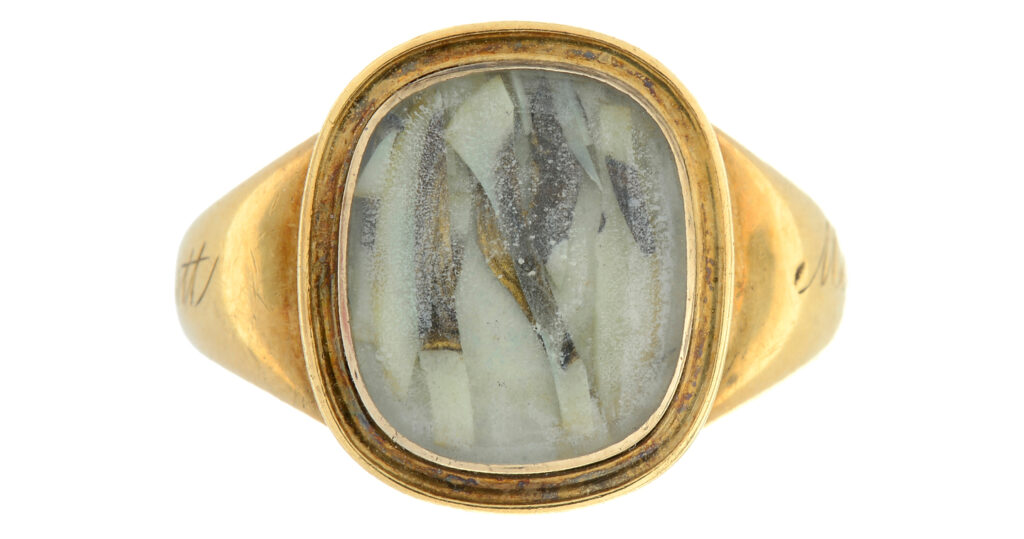
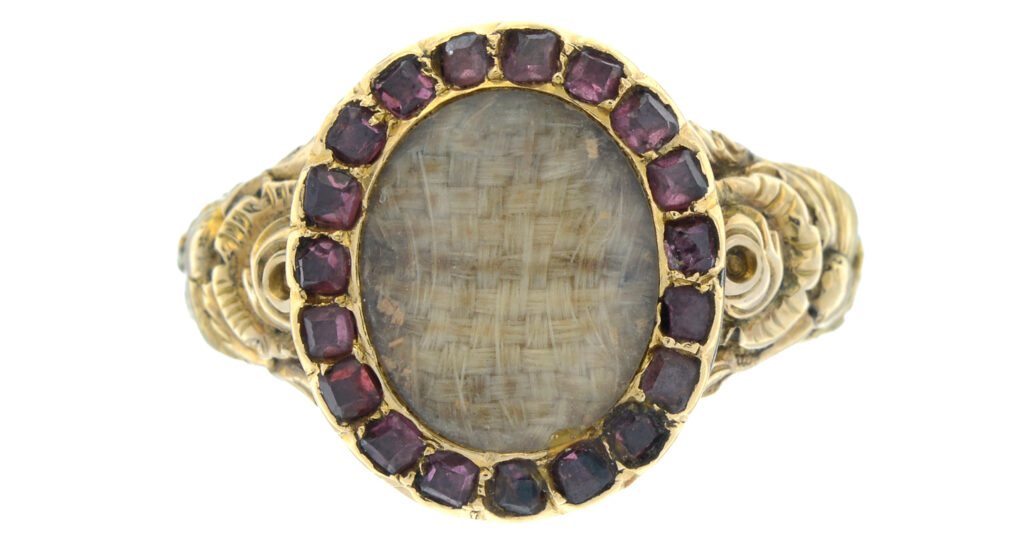
Embroidered Hair on Silk/Material Ring, 1763
Share this article with...


As we saw in the ‘Eternity Knot Ring Shows Changing Styles in the 18thC’ article, the Neoclassical movement swiftly appropriated the styles of the Rococo. Jewellery had to accommodate this vast change with areas of space that could house Neoclassical depictions in art, placed on vellum or ivory, as well as provide a movement towards humanism a way with which to adorn the body with jewels.
Social change facilitated this, as a shift away from the previously ecclesiastical dominance of art styles towards this humanist approach and appreciation for ancient Greek styles opened up insular societies to consider other cultures that would previously have conflicted with their social hierarchy.

The increase in trade was also a major factor, as precious gems and materials that would have been unattainable became much more fluid, as cultures spread across the globe.
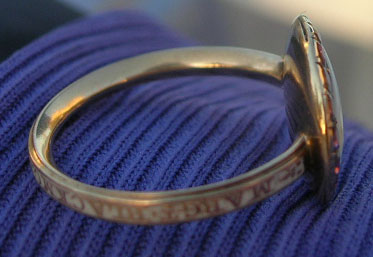
This ring, with its woven hair on silk inside the oval bezel, flanked with rubies, is an excellent example of this burgeoning Neoclassical movement. Produced at the same time as the end of the Rococo movement, it does away with the organic Rococo flourishes that were so typical, such as the rosette bezel and the ribbon/scroll motif along the band. This ring has the Neoclassical straight edges, yet morphs the twisted bands into the straight shape, keeping the dedication across the band. The band itself is white enamel, presented for a virginal/unmarried woman (in this case, 22 year old Margt Blackmore) and being c.1763 is right on the cusp of the Neoclassical movement.
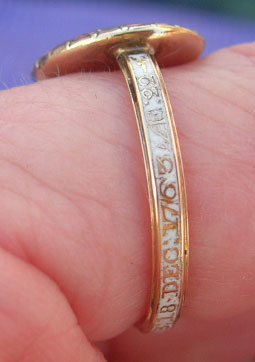 Early styles in art changes, such as this one, show a lot more variation in style, as there was no formal standardisation that could be mass produced and sold. Hence, the hair/silk woven dedication with the Tree of Life is a wonderful memento that didn’t see as much use by the time of the 1790s, when the Neoclassical movement was in full-swing.
Further Reading:
> Neoclassical Art as Depicted in Embroidered Hair on Silk/Material
> Property of a Lady: 18th Century Costume, Mourning and Art in a Neoclassical Miniature
> Symbolism Meaning: Plants
> The Further the Distance the Tighter the Knot; Eternity and Romantic Symbolism on a French Sepia Miniature
Courtesy: Barbara Robbins
Country: England
Year: 18 Dec 1763
Dedication: Margt Blackmore ob 18th of Dec 1763 AE 22
As we saw in the ‘Eternity Knot Ring Shows Changing Styles in the 18thC’ article, the Neoclassical movement swiftly appropriated the styles of the Rococo. Jewellery had to accommodate this vast change with areas of space that could house Neoclassical depictions in art, placed on vellum or ivory, as well as provide a movement towards humanism a way with which to adorn the body with jewels.
Social change facilitated this, as a shift away from the previously ecclesiastical dominance of art styles towards this humanist approach and appreciation for ancient Greek styles opened up insular societies to consider other cultures that would previously have conflicted with their social hierarchy.
Share this article with...