Wearing Hair
Share this article with...


Wearing hair isn’t something that I would recommend as a daily habit. My only caveat for that is that if the hair is worn as a memento, under glass or protected in some way. Why, I hear you ask? Well, if you want to keep that antique hair supple and lasting another 100 years, you’d best keep it climate controlled and away from environmental harms.
‘Hayden, wearing hairwork keeps is pliable through the oils in your skin!’ a dealer once told me. Hairwork has been treated before weaving, a method which has kept it physical since the day it was cut from a loved one’s head (or the head of an European nun who dedicated it for money). From experience, it is true that this is the case, you can keep your 150 year old hairwork quite mailable, but you will also experience discolouration to the hair and your sweat will slick it down. If you have a beautiful weave, which may have originally been intended to wear over a costume and you’re wearing it at the neck on a warm day or at a function, it’s likely to gain some of your essence upon its coating. When it comes to cleaning this off, I haven’t had a the heart to take any of my hairwork to ‘the cleaners’ as it were, but if anyone has a good method for this, please post or let me know.
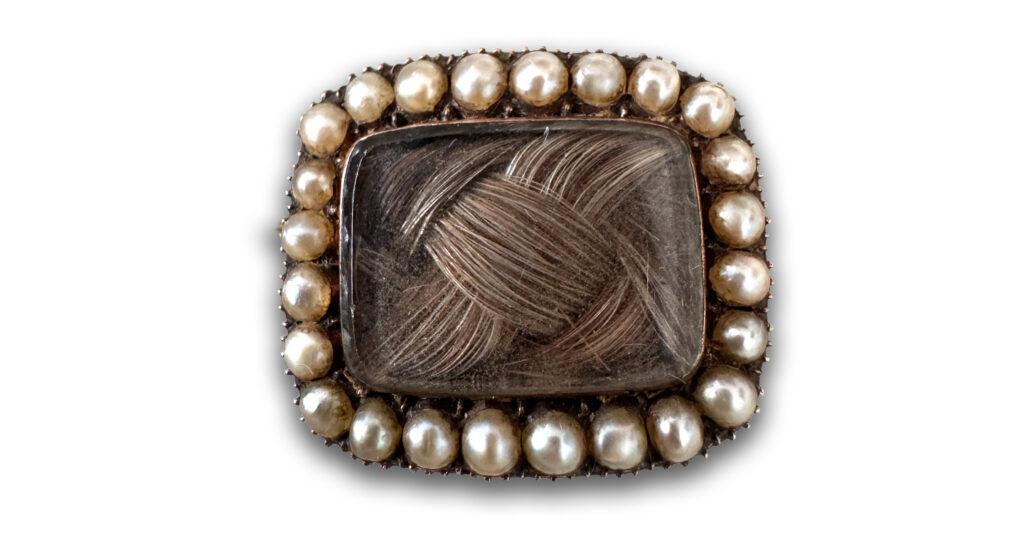
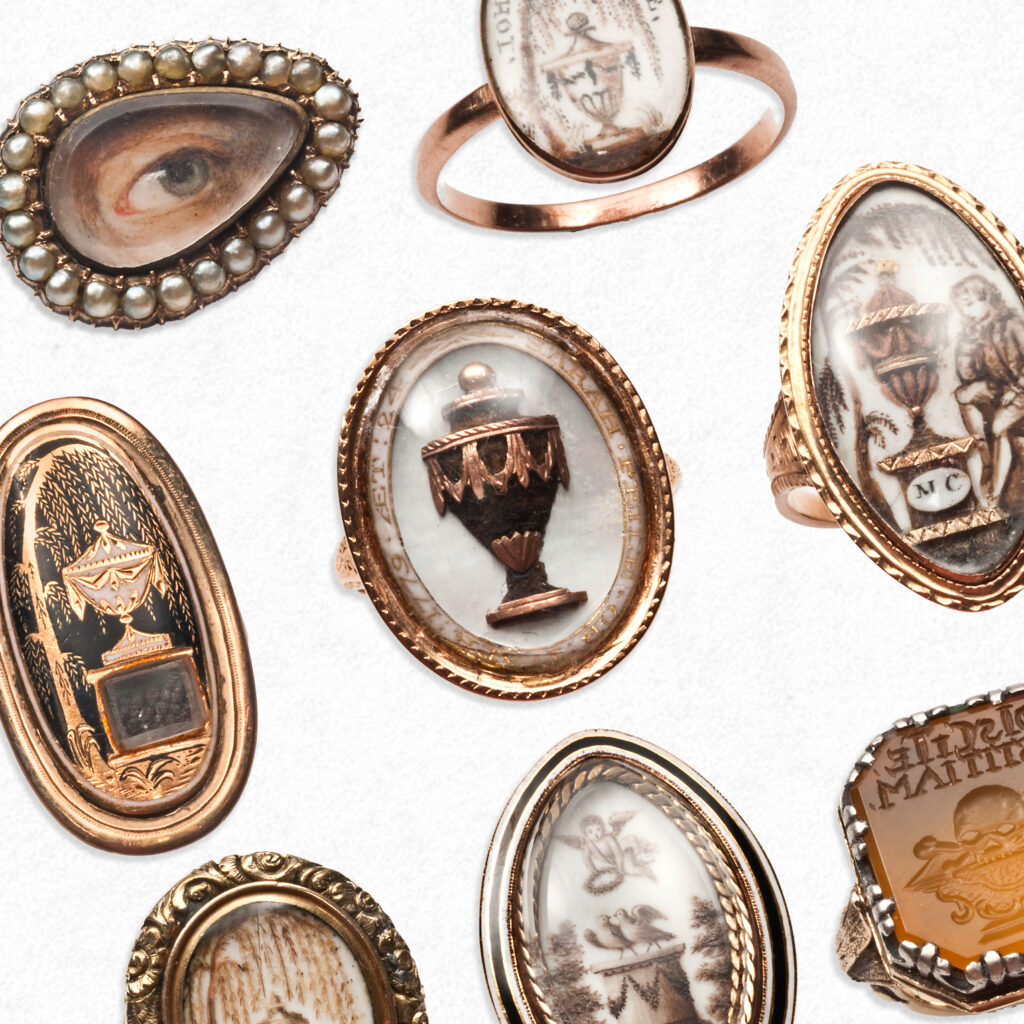
Hair in a locket or ring memento (or any other jewellery memento where it is sealed off) is quite logical. Here, a treated (or even untreated) piece of hair can be kept for years and worn without any real fear of being ruined. I’ve worn an untreated piece of hair on my wedding ring finger each day for the past ten years and I’ve seen no deterioration to the hair itself. I wash my hands with impunity and even on 40+ Celsius degree days I’m as comfortable as can be.
Bracelets are much the same as necklaces, please be aware that any hair touching the skin wasn’t immediately intended to be so. Respect the era in which it was made, these pieces had a reason for being and any excess wearing will expedite their exit from the planet. If you wear something for its pride of place or for its sentimental value, then that is for your prerogative, but if you have a piece that is unrelated, then consider its history and for whom it was made. Love and appreciate it and it will love you back by lasting several more generations.
Share this article with...