Forget-Me-Not Symbolism in Jewels
Share this article with...


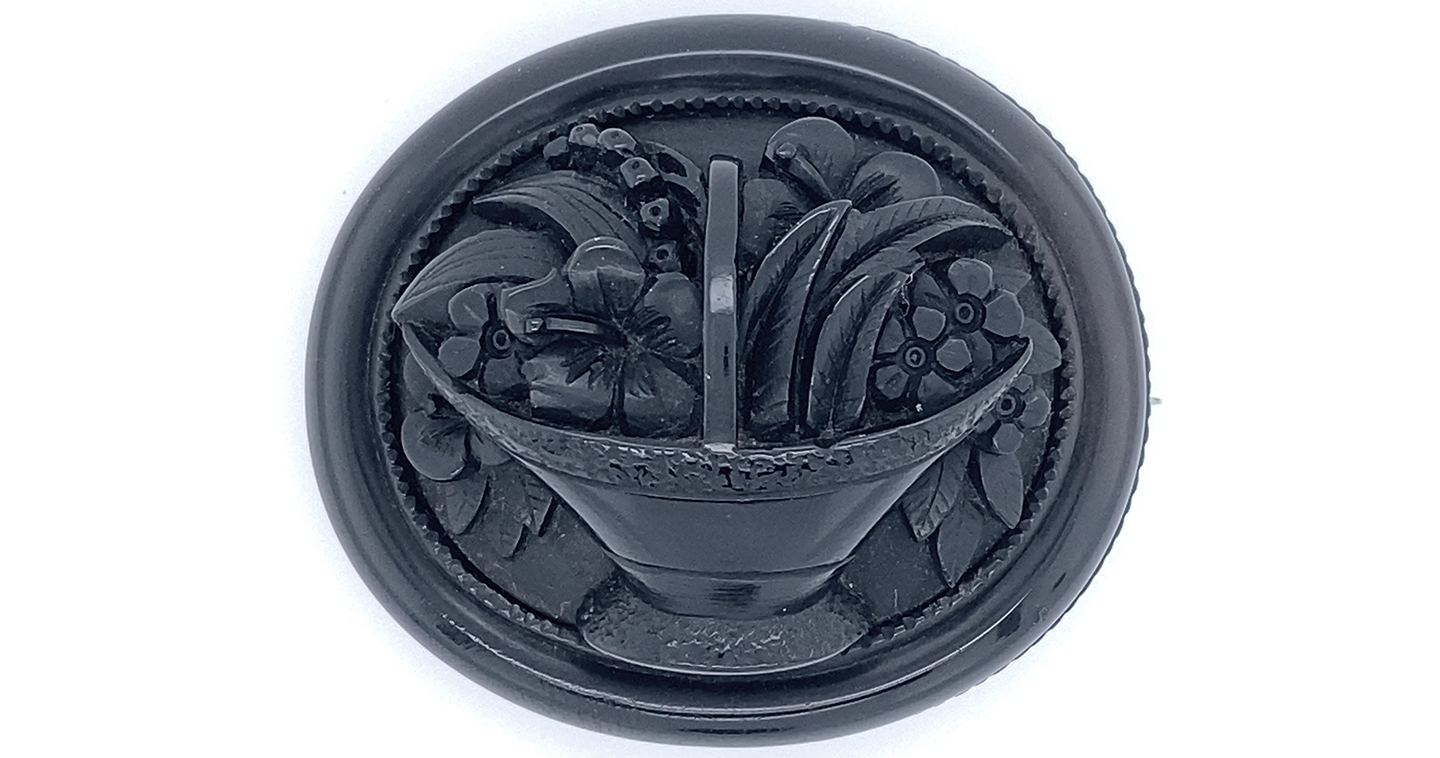
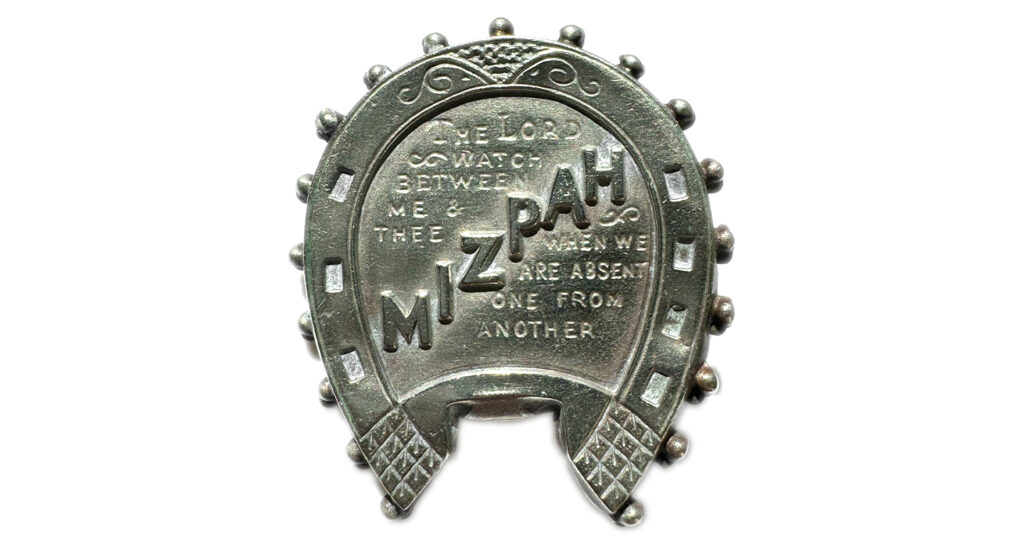
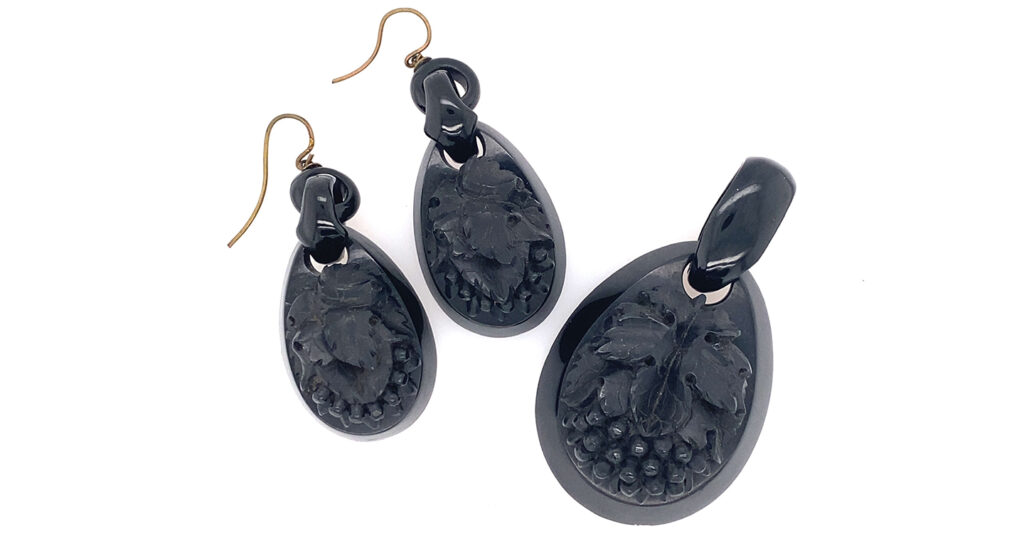
The Museum of Whitby Jet is a genuine establishment of living history. Combined with the store W. Hamond, it presents the oldest connection to 19th century Whitby Jet manufacture that still exists. It is a tribute to the 1500 men and 200 shops that existed in 1873 to produce the finest quality of Jet available in the world. Their craft, of carving, turning and polishing jet held a standard that set the British Empire beyond any other jet industry in the world, being held in the highest regard by Queen Victoria herself.
Due to the popularity of Whitby Jet, the instances of its carving designs are almost infinite. The Victorians relished the romantic and sentimental language of flowers. They were educated, had access to new wealth and were the first affluent middle class that could afford leisure time. Travel was a part of seasonal Victorian lifestyle and cottage industries emerged with the connection of rail lines that ferried these sentimental people across Britain. Whitby’s popularity as the centre of Jet fed its local community and its economy. Carvers were charged with appealing to the most popular designs from the visitors, who requested sentimental tokens to gift to their loved ones.
This Art of Mourning series is in partnership with the Museum of Whitby Jet and is a look at the jewels of the museum through the eyes of the Victorians who requested and understood the love language of flowers.
To achieve this, part 1 of the series is an introduction to Whitby Jet, which can be read below:
Link > Discover Whitby Jet
Part 2 is an understanding of ‘floriography’, a late 18th and 19th century attempt by philosophers and writers to connect floral discoveries of the world to emotion to empirical fact. This can be read below:
Link > Understanding Symbolism: Botany and Floriography
Symbolism of The Forget-Me-Not
Victorian society relied on the bucolic vistas and symbols that art provided as a way to escape the urbanised and industrial world and return to the medieval values of chivalry, love, piety and romance. The forget-me-not is the perfect flower to identify with these values, as it brings a strong connection of the giver to the wearer in a jewel together. Chivalry in the romantic movement was an important aspect of storytelling, as the narratives that flowed from a knight’s behaviour towards a lady, upheld the values of social boundaries and respect that a 19th century gentleman should honour. Allegorical stories provided a solid basis for the imaginations of the Victorians, who were well read and increasingly affluent in the middle classes. Their ability to travel for leisure, with the advent of the railway, allowed cottage industries throughout Britain to flourish and provide the travellers with a sentimental token to give to their loved one.
A forget-me-not in the design of a 19th century jewel typifies the feeling of 19th century Britain. Its meaning belongs to an allegorical tale of a German knight who was picking flowers by the side of the Danube river with his partner. He fell into the Danube and his armour dragged him in. He cried ”forget me not, O Lord”, as he threw the flowers to his loved one and drowned. This tale has its roots in the 15th century, but with many of these stories, folktales often carry the weight of their time.
The Language of Flowers with Illustrated Poetry by Frederic Shoberl (1839) describes this story:
“THE name of this beautiful little flower, which enamels the banks of our rivers with its corollas of celestial blue, corresponds with the signification that is now universally attached to it. That name it derived from a German tradition full of melancholy romance. It is related that a young couple, on the eve of being united, whilst walking along the delightful banks of the Danube, saw a cluster of these lovely flowers floating on the stream, which was bearing it away. The affianced bride admired the beauty of the flower, and lamented its fatal destiny. The lover plunged into the water to secure it: no sooner had he caught it than he found himself sinking, but, making a last effort, he threw it on the bank at the feet of his betrothed, and, at the moment of disappearing for ever, exclaimed Vergiss meinnicht! Since that event, this flower has been made emblematical of the sentiment, and been distinguished by the name of Forget-me-not.”
Previously, Henry Phillips’ Floral Emblems (1825) describes the forget-me-not as:
This plant so celebrated in German love song, under the emblem of “Vergils mich
nicht,” has hence been made to signify “for get me not,” by all the sonnet writers of
Europe.
“Where time, on sorrow’s page of gloom
Has fixed its envious lot,
Or swept the record from the tomb,
It says- Forget-me-not.”
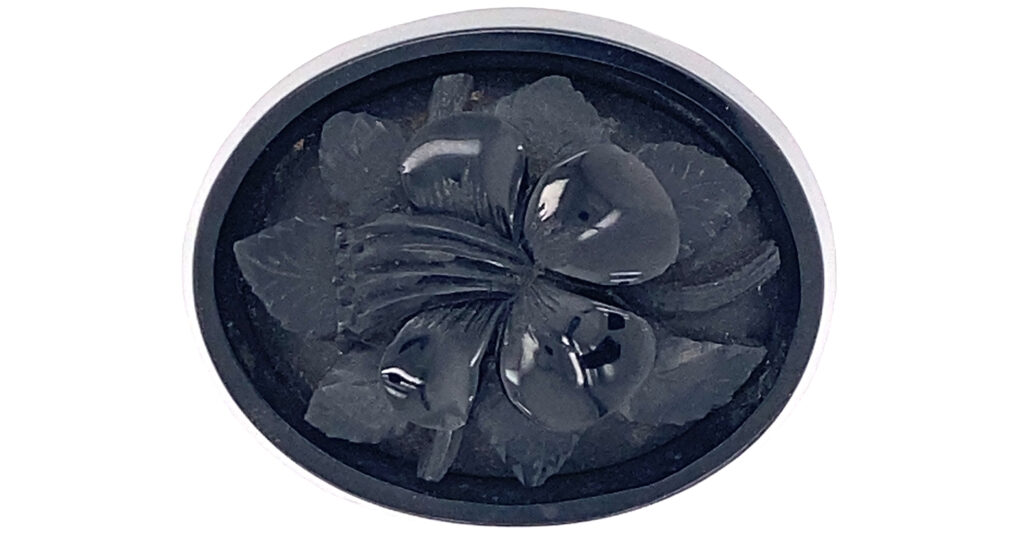
Its meaning was well established through its name. The forget-me-not can be seen in a variety of Victorian jewels and was one of the most popular symbols used for sentimentality in life and death.
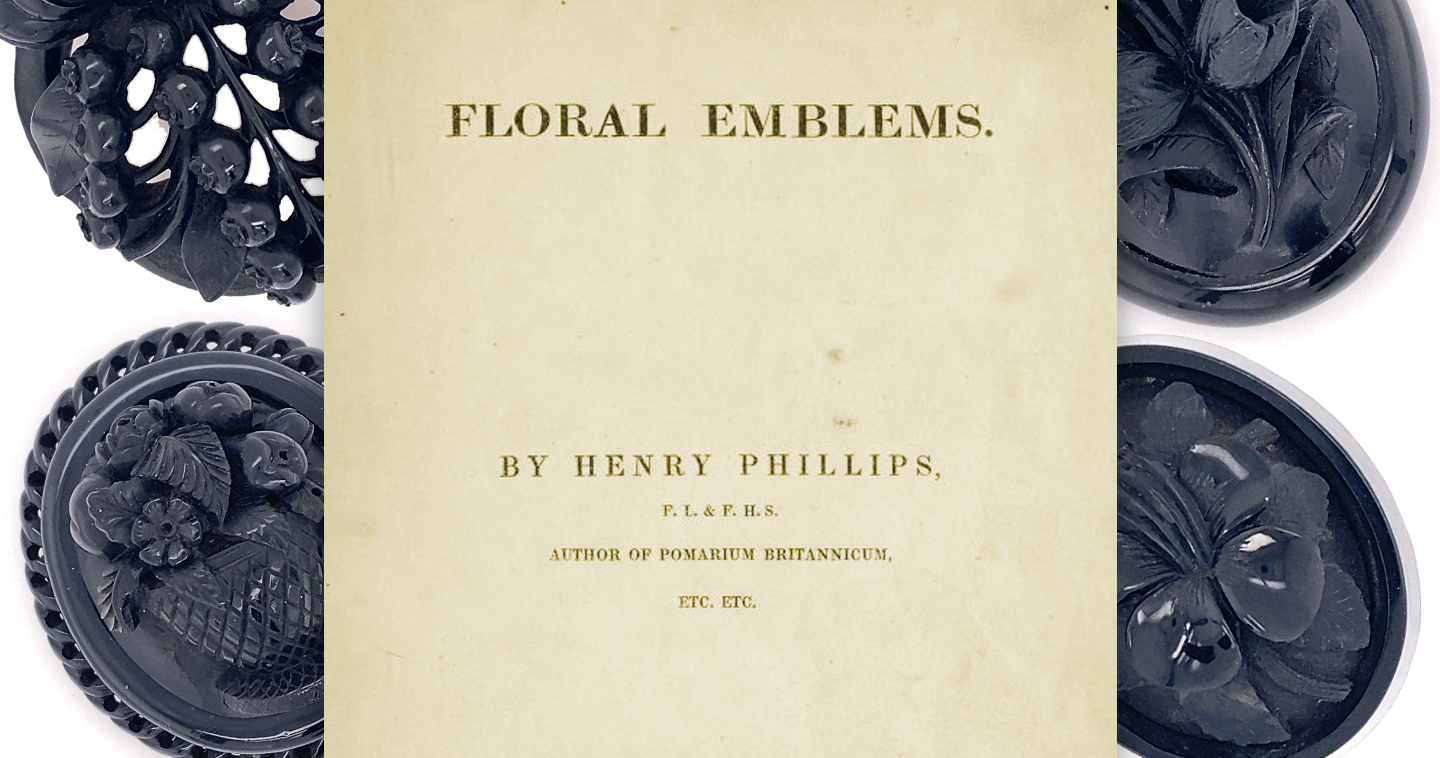
FORGET ME NOT.
Floral Emblems, p.151Mouse-ear Scorpion Grass. – Myosotis Palustris.
This plant so celebrated in German love song, under the emblem of “Vergils mich
nicht,” has hence been made to signify “for get me not,” by all the sonnet writers of
Europe.
“Where time, on sorrow’s page of gloom
Has fixed its envious lot,
Or swept the record from the tomb,
It says- Forget-me-not.”
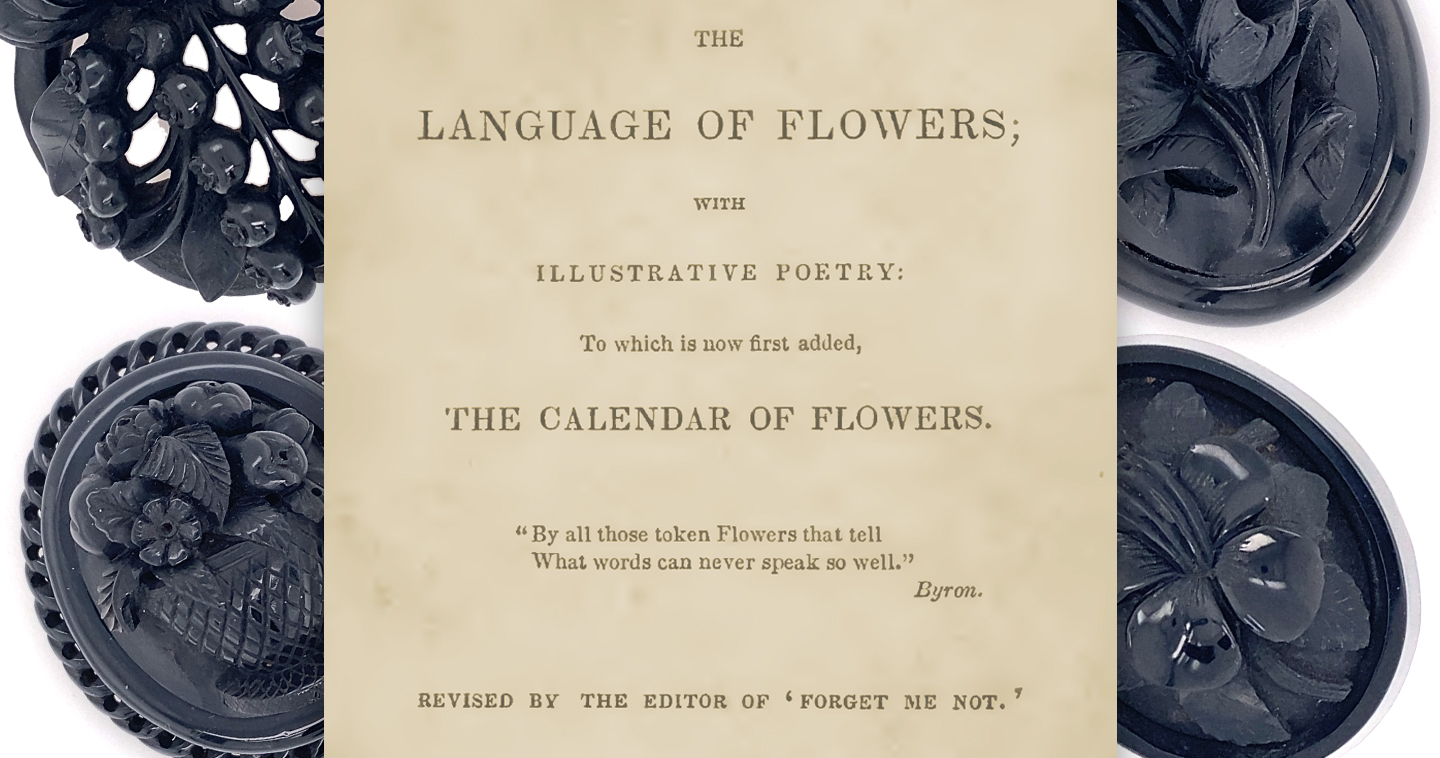
Language of Flowers, p.184-186FORGET-ME-NOT.
THE name of this beautiful little flower, which enamels the banks of our rivers with its corollas of celestial blue, corresponds with the signification that is now universally attached to it. That name it derived from a German tradition full of melancholy romance. It is related that a young couple, on the eve of being united, whilst walking along the delightful banks of the Danube, saw a cluster of these lovely flowers floating on the stream, which was bearing it away. The affianced bride admired the beauty of the flower, and lamented its fatal destiny. The lover plunged into the water to secure it: no sooner had he caught it than he found himself sinking, but, making a last effort, he threw it on the bank at the feet of his betrothed, and, at the moment of disappearing for ever, exclaimed Vergiss meinnicht! Since that event, this flower has been made emblematical of the sentiment, and been distinguished by the name of Forget-me-not.
Its Linnean appellation is Myosotis palustris, and its common English name, Mouse-ear Scorpion-grass.
It is not surprising that the Forget-me-not should have become a favourite with our own poets as well as those of Germany….
The Myosotis palustris is no where found in greater perfection and abundance than on the bank of a stream near Luxemburg, which springs from the foot of an oak, that appears as old as the world, and, forming a number of little cascades, descends into an extensive plain. It is only the bank most exposed to the south that is thickly bordered by the Forget-me-not, and the plants hanging down seem to delight in looking at themselves in the crystal mirror of the stream, which is called The Fairies’ bath, or the Cascade of the Enchanted Oak. To this favourite spot the young females often descend from the ramparts of the city, on holidays, to dance near the brook. To see them crowned with the flowers that line its bank, you would take them for Nymphs holding their revels in honour of the Naïad of the Enchanted Oak.
For some years this little flower has been cultivated in France with the greatest care, and it finds a ready sale in the markets in Paris. Phillips recommends its cultivation
for the same purpose in this country, particularly to cottagers who live near towns; “as, by transplanting the trailing branches from their borders into small pots, they would find it a profitable employ to send them to market, for few people would withstand the temptation to purchase these interesting flowers, that carry in their eye the tale of Forget-me-not.
The same writer says he has been informed that “the decoction or the juice of this plant has the peculiar property of hardening steel ; and that, if edge-tools of that metal be made red-hot, and then quenched in the juice, and this process be repeated several times, the steel will become so hard as to cut iron, and even stone, without turning the edge.”
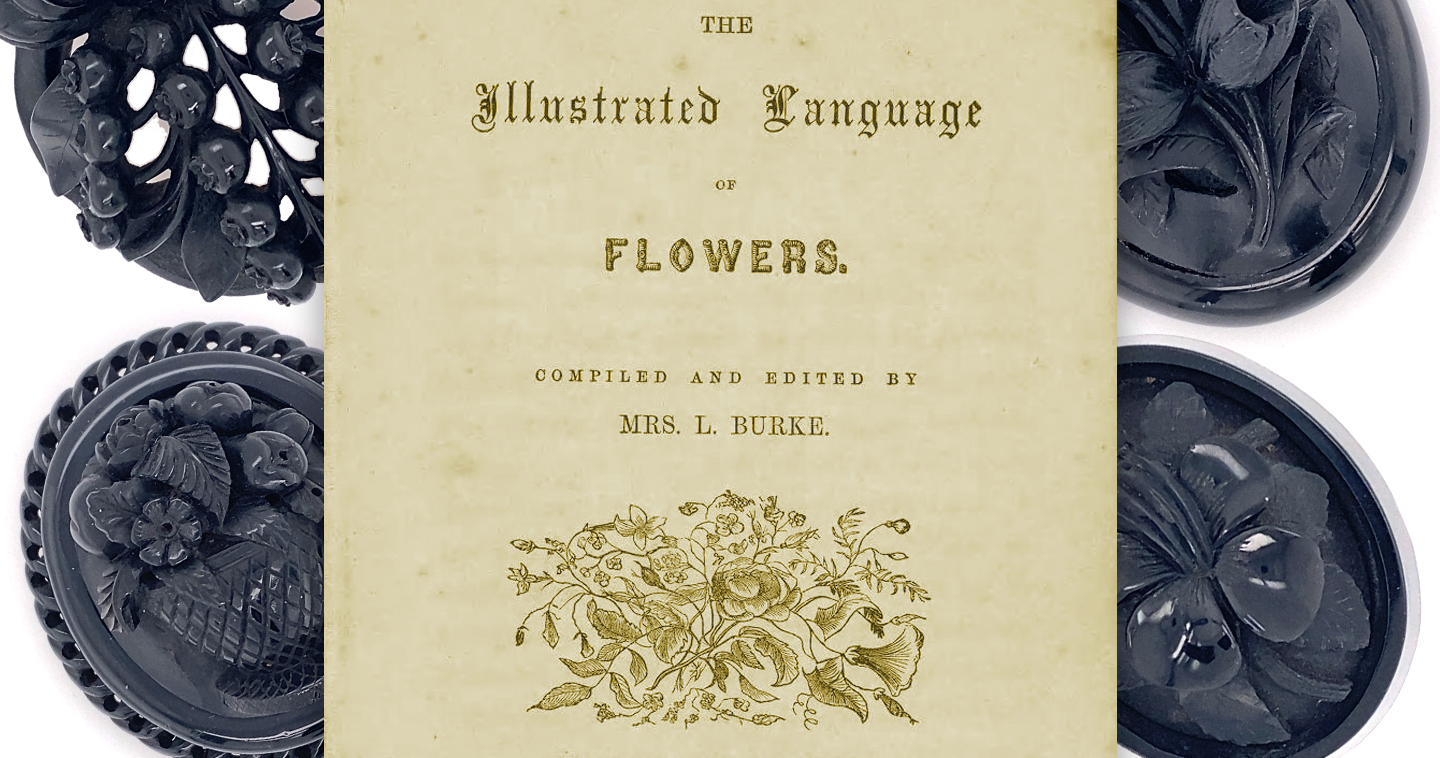
The Illustrated Language of Flowers, p.23Forget-me-not… True love. Forget me not.
And oh ! be sure ye bring me this,
The love-link ’tis of pure and precious thought,
Memento blest of love-engendered bliss !
Balm of the soul!
Yes, bring the pale blue-eyed Forget Me Not.
T. L. MERRITT.
Share this article with...